
Recovery Essentials + Reset Your Nervous System
Cozy Recovery Essentials: 14 Fall Recovery Tips From a San Diego Physical Therapist
By Dr. Noora (PT, DPT)
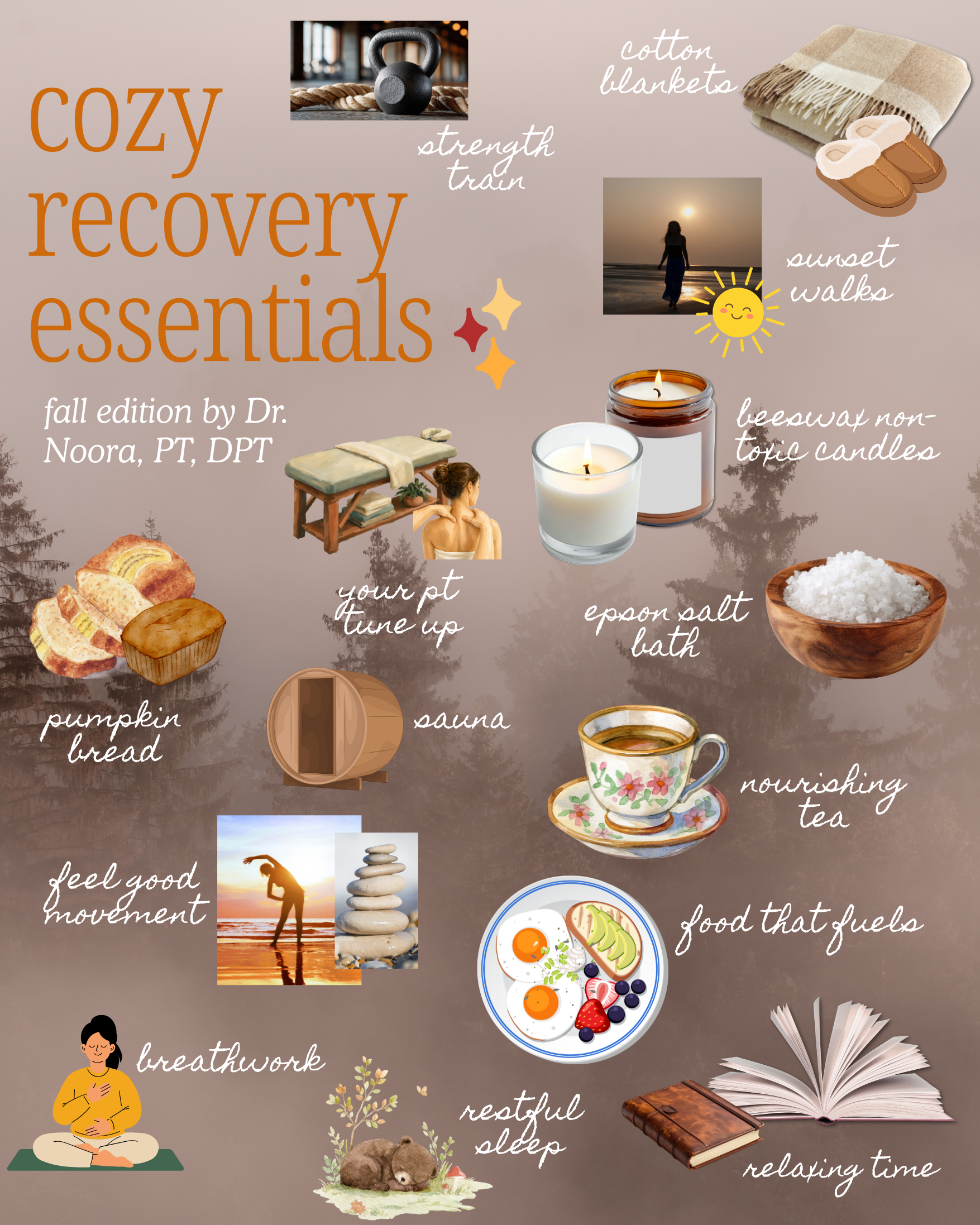
Recovery is built in the small daily habits that help your body repair and stay strong. Here are my 14 cozy recovery essentials for a fall recovery routine that actually sticks.
Strength train. Muscle is one of the best tools you have for protecting your joints and bones as you age. Two or three sessions a week of weights or bodyweight work is plenty for most people. Start lighter than you think and focus on good form.
Cotton blankets. Comfort matters for recovery. A breathable cotton blanket keeps you warm without overheating at night (which can disrupt sleep). Wrap up and let your body know it's safe to rest.
Sunset walks. A walk at golden hour gives you gentle movement and fresh air in one easy habit. Walking keeps your joints moving and your circulation flowing. Watching the light fade is also a natural cue that the day is winding down.
Beeswax candles. Soft candlelight is an easy way to dim the room and start winding down in the evening. I like beeswax or other clean-burning candles without added synthetic fragrance. Keep a window cracked for airflow and never leave a flame unattended.
Your PT tune-up. You service your car before it breaks down. Your body deserves the same care. A seasonal check-in with your physical therapist can catch small aches and movement imbalances before they turn into injuries.
Epsom salt bath. A warm bath relaxes tight muscles and calms a busy mind. Research on how much magnesium your skin absorbs is limited. The warmth and the quiet time are benefits on their own.
Pumpkin bread. Recovery should include joy. Bake a loaf with friends or family and enjoy a slice without guilt. Pumpkin also brings fiber and vitamin A to the table.
Sauna. Heat can ease muscle tension and feels amazing on a cool fall day. Large studies from Finland link regular sauna use with better heart health. Hydrate well and check with your doctor first if you're pregnant or have a heart condition.
Nourishing tea. A warm mug is a built-in pause in your day. Herbal blends like chamomile or peppermint are caffeine free and perfect for the evening. Sit down while you sip it instead of drinking it on the go.
Feel-good movement. Not every workout needs to be intense. Yoga or stretching or a slow swim all count. Choose movement that leaves you feeling better than when you started.
Food that fuels. Your tissues heal with the building blocks you give them. Aim for protein at every meal along with colorful produce and healthy fats. Eggs with avocado toast and berries is a great place to start.
Breathwork. Slow belly breathing helps shift your body out of fight-or-flight mode. Try breathing in through your nose for 4 counts and out for 6. A few minutes a day can ease tension in your neck and shoulders and pelvic floor.
Restful sleep. Sleep is when your body does most of its repair work. Most adults need 7 to 9 hours a night. Keep your room cool and dark and aim for the same bedtime each night.
Relaxing time. Rest is productive. Curl up with a good book and let your body recover from the week. Your muscles and your mind both need downtime to come back stronger.
Fall Recovery FAQ
How can I speed up muscle recovery naturally?
Sleep and protein and gentle movement do most of the work. Aim for 7 to 9 hours of sleep and protein at every meal. Light activity like walking keeps blood flowing to tired muscles.
Is a sauna good for muscle recovery?
Heat can ease muscle tension and help you relax after training. Stay hydrated and keep sessions short when you're starting out. Check with your doctor first if you're pregnant or have a heart condition.
How often should I see a physical therapist for a tune-up?
Many active people benefit from a check-in once a season or before a new training block. Come in sooner if pain lasts more than a couple of weeks or changes how you move.
Looking for physical therapy in San Diego? Book a visit with Dr. Noora at Sunset Performance Physical Therapy and we'll build a recovery routine that fits your body.
How to Reset Your Nervous System: 14 Calming Tips From a Physical Therapist
By Dr. Noora (PT, DPT)
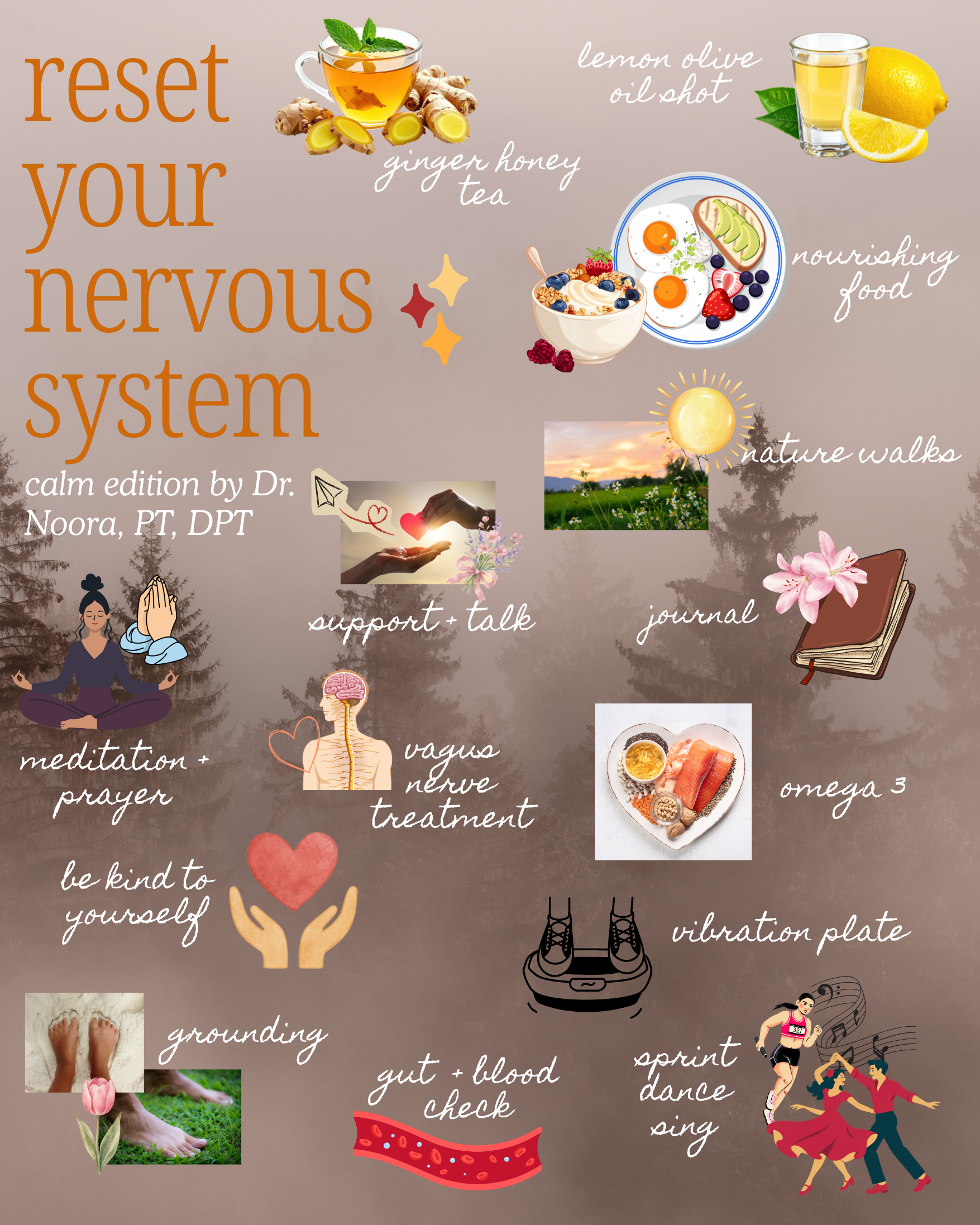
Stress lives in the body. It shows up as tight shoulders and shallow breathing and restless sleep and pain that won't settle. When your nervous system is stuck in fight-or-flight mode, your body has a harder time healing. These are my 14 favorite ways to calm your nervous system naturally and shift from stressed to calm.
Ginger honey tea. Ginger has a long history as a remedy for an upset stomach. Fresh ginger steeped in hot water with a spoonful of honey makes a warm and soothing ritual. It's a perfect slow sip at the end of the day.
Lemon olive oil shot. Some people love a morning shot of olive oil with fresh lemon juice. Olive oil is rich in healthy monounsaturated fats. Think of it as a simple ritual rather than a cure-all and keep your whole diet in focus.
Nourishing food. Steady blood sugar means fewer energy crashes and more stable moods. Build your meals around protein and fiber and healthy fat. Try not to skip meals when life gets busy.
Nature walks. Time among trees and green space is linked with lower stress. Leave your earbuds at home and notice what you see and hear. Even 20 minutes outside helps.
Support + talk. Connection is one of the strongest signals of safety for your nervous system. Call a friend or see a therapist or join a group. You don't have to carry everything alone.
Journal. Getting your thoughts onto paper can quiet a racing mind. Try listing three things you're grateful for or doing a quick brain dump before bed. There's no wrong way to do it.
Meditation + prayer. Quiet reflection gives your mind a break from constant input. Whether you meditate or pray or simply sit in silence, a few minutes a day can make a difference. Consistency matters more than length.
Vagus nerve treatment. The vagus nerve helps run your "rest and digest" response. In PT we support it with diaphragmatic breathing and gentle hands-on work for the neck and ribs and abdomen. These techniques can help your body find its calm setting more easily.
Omega-3. Omega-3 fats from fish like salmon and sardines support heart and brain health. They may also help your body manage inflammation. Talk to your doctor before starting a supplement (especially if you take blood thinners).
Be kind to yourself. The way you talk to yourself matters. Harsh self-criticism keeps your stress response switched on. Speak to yourself the way you would to a friend who is struggling.
Vibration plate. Standing on a vibration plate is a low-impact way to get your muscles working. Some research shows benefits for balance and bone health in certain groups. Start with short sessions and ask your PT if it's right for you.
Grounding. Stand or walk barefoot on grass or sand. Many people find it calming to slow down and feel the earth under their feet. It's also great for foot strength and balance.
Gut + blood check. Fatigue and anxiety and low mood can sometimes trace back to low iron or low vitamin D or thyroid changes. Ask your doctor about routine blood work if you've been feeling off. Your gut health plays a role too.
Sprint + dance + sing. Short bursts of movement help your body work through the stress response. Singing and humming are easy ways to slow down your breathing. Put on your favorite song and move like nobody's watching.
Nervous System Reset FAQ
How can I calm my nervous system fast?
Slow down your exhale. Breathing in for 4 counts and out for 6 is one of the quickest ways to signal safety to your body. A short walk outside helps too.
Can physical therapy help with stress?
Yes. Stress often shows up as muscle tension and jaw clenching and pelvic floor tightness and pain. A physical therapist can treat those physical symptoms and teach breathing and movement strategies that help your body relax.
What does it mean to regulate your nervous system?
It means helping your body move between alert and calm states with more ease. Daily habits like sleep and movement and connection all build that flexibility over time.
Feeling stuck in stress mode? Book a visit with Dr. Noora at Sunset Performance Physical Therapy in San Diego and we'll build a plan that works for your body.